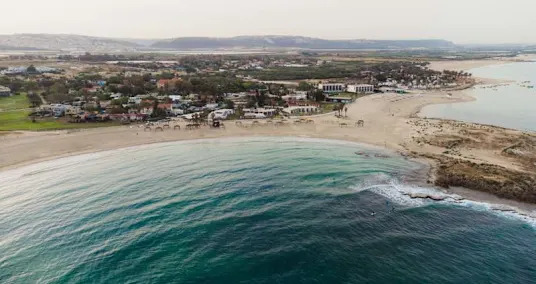
The discovery was made in an ancient shipwreck in the Dor Lagoon near the Carmel Coast, where archaeologists recovered nine pieces of unprocessed iron known as “blooms.”
Researchers from the University of Haifa said Wednesday that an underwater excavation off Israel’s northern Mediterranean coast uncovered what they described as the earliest known cargo of raw iron transported by ship, dating back around 2,600 years, Xinhua reported.
The discovery was made in an ancient shipwreck in the Dor Lagoon near the Carmel Coast, where archaeologists recovered nine pieces of unprocessed iron known as “blooms.” According to the university, the find provides direct evidence of how iron was transported in its earliest commercial stages.
The material was preserved in its original form, having solidified directly in a smelting furnace without undergoing forging or further refinement. Researchers said this distinguishes the cargo from later iron artifacts that typically show signs of shaping or tool-making.
Unlike copper and bronze, which could be melted into liquid form in ancient production processes, iron was heated with charcoal to produce a solid, porous mass. That mass was generally hammered to remove impurities and create denser material suitable for tools and implements.
The recovered blooms showed no indication of that secondary processing stage, suggesting they were transported immediately after production.

Earliest iron shipment discovered in ancient Mediterranean wreck
To determine the age and condition of the cargo, researchers conducted microscopic and chemical analyses.
Radiocarbon dating was also carried out on charred wood embedded in one of the pieces, helping confirm the timeline of the shipment. The findings were published in the journal Heritage Science.
Researchers said the cargo indicates that iron was being moved in raw form from production sites to other locations for further processing, pointing to a level of specialization in ancient manufacturing and trade networks in the Mediterranean.
The University of Haifa said the discovery provides new insight into early iron production and distribution practices in the region.
LATEST POSTS
- 1
 Americans generally like wolves − except when we’re reminded of our politics
 - 2'The Boys' Season 5 premiere: How to watch for less, what to know about the final series and more
- 3Vote In favor of Your Favored Comupter Game
- 4Catholic influencer shares death of 5-year-old son from 'severe' flu
- 5Fears of global aluminum shortages intensify




- 6 Top of the line Lodgings All over The Planet, Which One Do You Concur With
- Former GLP-1 users regain lost weight after about 18 months, study says
- Step in Style: A Survey of \Solace and Execution on the Track\ Running Shoes
- A mom stopped giving her kids snacks — and sparked a debate about eating habits
- Man threatens attack on German high-speed train, injures several
- Council removes proposal to rename park named after former president of Israel
- Surging measles cases are 'fire alarm' warning that other diseases could be next
- Meet the Stars of the Feline World: Well known Pet Feline Varieties
- Tzrifin base exhibition reveals Hamas and Hezbollah arms, showing structure behind attacks